
GOVERNMENT & PUBLIC SECTOR
Secure, Interoperable Data Services for Public Impact.
Connect data across departments while supporting traceability, data ownership, service modernization and local operational controls. Bassirah designs public-sector data platforms that make information discoverable and shareable under clear access policies, deployed on infrastructure you control where the selected technologies support it.
Inter-agency data sharing · Open data catalogs · Citizen-service analytics · On-prem & hybrid infrastructure

THE CHALLENGE
Public Data Is Valuable Only When It Can Be Found, Trusted and Shared.
Government organizations hold rich data, but it sits in departmental systems with different owners, formats and access rules. Modernizing services means connecting it without losing control.
Departmental silos
Each agency runs its own systems and data models, so cross-department questions take weeks of manual extraction and reconciliation.
Unclear ownership and access
Without a shared catalog, it is hard to know who owns a dataset, what it means and who is allowed to use it.
Traceability and audit
Decisions and published statistics must be traceable to sources, with evidence of who accessed what and under which policy.
Local operational control
Many workloads must run on-premises or in customer-controlled environments, with dependencies and patching managed locally.
OUTCOMES
What We Help Public-Sector Teams Achieve.
Inter-agency data sharing
Give approved users federated SQL access to permitted datasets across departments, reducing duplication for selected queries while each source keeps its own controls.
Open data catalogs
Make datasets discoverable with DataHub ownership, descriptions, classification and lineage, so teams know what exists and who to ask.
Citizen-service analytics
Measure service performance and demand with tested, documented data models that analysts and leadership can trust.
Secure on-prem & hybrid infrastructure
Build object and lakehouse storage on MinIO AIStor and operational applications on PostgreSQL, deployed in customer-controlled environments where supported.
REFERENCE APPROACH
Connect Departments Without Centralizing Everything.
DataHub for ownership and discovery, Trino or Starburst for federation, MinIO AIStor for object and lakehouse patterns, and PostgreSQL for applications. Federated access still needs access policies, modeling, metadata and governance; it is not a substitute for them.
Logical pattern
- Catalog and own.Register datasets in DataHub with owners, descriptions, classification and lineage.
- Land approved data.Store curated datasets in customer-controlled object storage and Iceberg tables on MinIO AIStor, where the table interfaces are supported.
- Federate access.Trino OSS or Starburst queries permitted sources and lakehouse tables, with access control enforced at the query layer and in the sources.
- Model and test.dbt builds documented, tested models for service and performance reporting.
- Serve applications.PostgreSQL supports operational applications and service workflows, with HA/DR designed per scope.

Component responsibilities
| Component | Role | Qualification |
|---|---|---|
| DataHub | Ownership, discovery, classification and lineage | Integrations validated per source; DataHub Core is supported through independent engineering |
| Trino OSS or Starburst | Federated SQL across departments and lakehouse tables | Choose per support, governance and licensed-capability needs |
| MinIO AIStor | Object storage and Iceberg table services | Residency and configuration validated per deployment |
| dbt Core / dbt OSS | Tested, documented transformation models | Supported releases stated per engagement |
| PostgreSQL | Operational application data | Sized and protected for the workload |
Planning a data-sharing initiative?
We will help you design access, ownership and federation together.
PROOF PACKAGE
Evidence for Your Governance and Audit Stakeholders.
We define the evidence with your data governance, security and audit teams, then collect it during a proof of concept. These are the metrics we validate, not guaranteed results.
What we measure
- Access policy evidence: who can query what, and proof that policies are enforced
- Time to insight for priority cross-department questions
- Metadata coverage: share of priority datasets with owner, description and lineage
What you receive
- Architecture decision record
- Secure data-flow and access-policy model
- Metadata and ownership baseline
- Phased proof-of-concept acceptance criteria
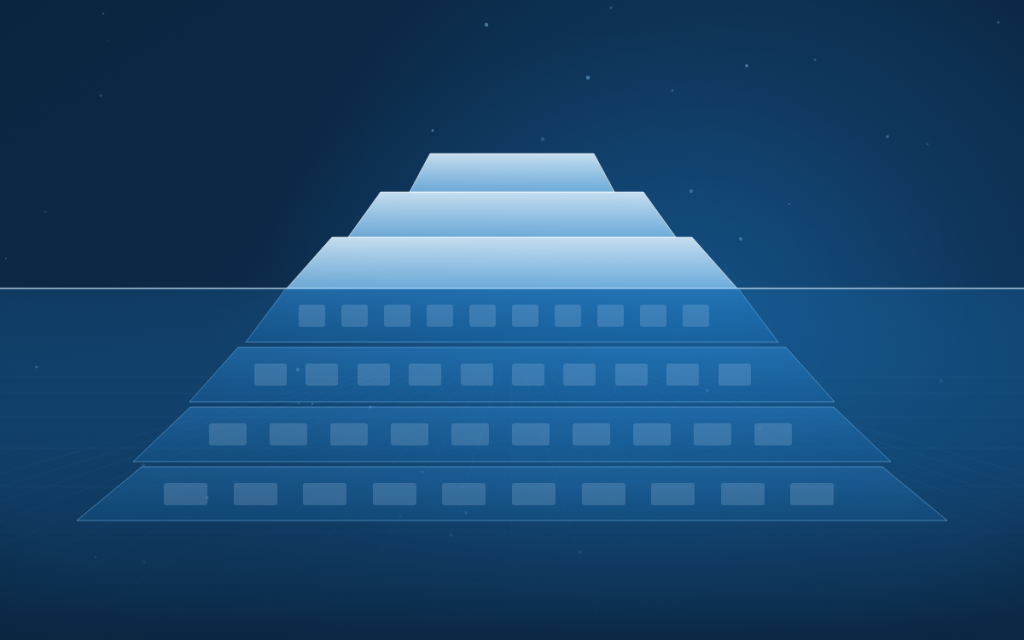
ARCHITECTURE BLUEPRINT
Open Iceberg Lakehouse & Governed Federation
An open lakehouse designed around access, trust and portability. Unify object-backed tables, distributed SQL access, analytics engineering and metadata visibility in one composable pattern, with integrations validated before they are relied on.
Stack: MinIO AIStor · Trino / Starburst · dbt · DataHub
Delivery caveat.
Bassirah validates sector-specific residency, privacy, retention, security and regulatory requirements during discovery. Product selection alone does not confer compliance. Customer-controlled or isolated deployments are designed where supported and verified for infrastructure, dependencies, patch import paths and egress per engagement.
ENGAGEMENT OFFERS
Practical First Steps.
Government Data Architecture Workshop
Map inter-agency use cases, ownership and access rules to a target federated architecture.
Data Catalog & Ownership Assessment
Baseline metadata coverage, ownership and lineage across priority datasets, with a governance roadmap.
Platform Deployment Review
Review on-prem or hybrid deployment constraints, dependencies, patching and recovery for your target platform.
Government FAQs
Can you deploy on-premises or in our own data centers?
Yes, where the selected technologies support it. We design on-premises, private cloud and hybrid deployments and verify dependencies, patch import paths and telemetry egress per engagement.
Does federated query remove the need for data pipelines?
No. Federated SQL can reduce duplication for selected queries, but access policies, modeling, metadata and some ELT remain necessary.
Will your platform satisfy our government data regulations?
Product selection alone does not confer compliance. We validate residency, privacy, retention, security and regulatory requirements with your stakeholders during discovery and design controls and evidence to support them.
How do you handle data ownership across agencies?
We register datasets in DataHub with named owners, descriptions and lineage, and enforce access at the query layer and in source systems according to the policies each owner defines.
Do you use open-source or commercial software?
Both, chosen per workload. Trino OSS, DataHub Core, dbt and PostgreSQL are supported through independent Bassirah engineering; Starburst and MinIO AIStor are strategic partner routes. Compare Trino and Starburst.
Related Pages
Discuss a Government Data Architecture
Tell us your services, data domains and deployment constraints. We will propose a practical architecture and the evidence your stakeholders need.